
The short version
- Starting from zero is normal. Most channels take over a year to reach 1,000 subscribers, and an expert doesn't need ad money for YouTube to pay off.12
- Days 1 to 30: get set up, pick the right ideas, record once, publish one strong video and its clips.
- Days 31 to 60: keep a fixed schedule and sharpen what landed.
- Days 61 to 90: when something hits, figure out why and repeat it on purpose.
- Measure calls booked first. Views come last.
Most YouTube advice for beginners is written for people who want to become YouTubers. That's not you.
If you're a coach, consultant or former corporate leader, you already win business through trust. You don't need a million subscribers. You need the right few hundred people to know how you think before they get on a call with you.
So here's what we'd do if a coach hired us tomorrow with zero subscribers.
First, why zero isn't the problem
You don't need ad revenue. From February 1, 2027, new channels will need 1,000 subscribers and 8,000 watch hours in a year to earn from ads, double the old 4,000 hours.2 That bar matters for full-time creators. For you, one new client is worth more than a year of ad money.
Most of your buyers aren't buying right now. Research from the LinkedIn B2B Institute suggests up to 95% of business buyers aren't in the market at any given time.3 Your videos keep you known until they are.
Growth takes longer than people admit. vidIQ looked at 9,414 channels started after 2023 that reached 1,000 subscribers. The middle one took about 16 months. The fastest quarter did it in under 8.5 months.1 And that only counts the channels that got there. Plan for a year, not a month.
The first 90 days
What happens when
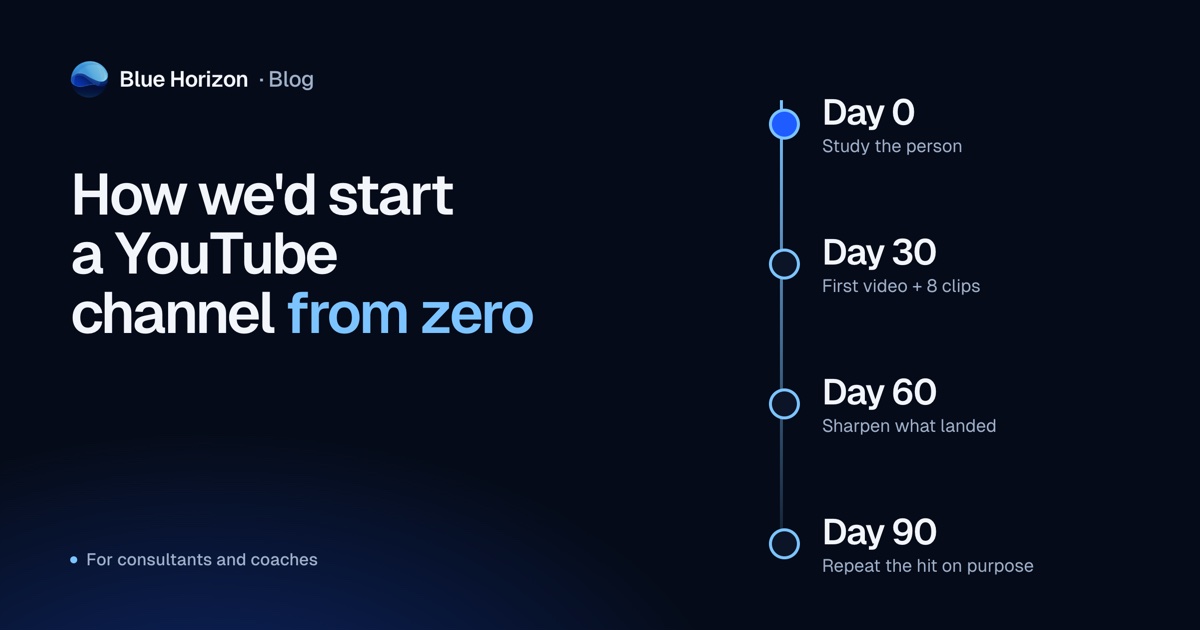
- Before day 0: study the personRead and watch everything they've already made. What do buyers ask them? What do they say on stage that they never post?
- Week 1: set upA short welcome video from each of us, a simple plan for month one, the first six ideas, and a date for the first recording.
- Days 1 to 30: first video + 8 clipsProfile cleanup, the right ideas, one interview, one recording session, one packaged video and its clips.
- Days 31 to 60: sharpenFixed posting schedule. Look at what landed and tighten the topics and packaging.
- Days 61 to 90: repeat the hitWhen a video beats your usual, figure out why and make the next one on purpose.
Before day 0: study the person
We spend real time on someone before we pitch them, and even more before we film them. Their talks, their posts, their podcast appearances, the questions their buyers ask. One of our clients, a tech sales coach, told us he almost never answers cold email. He answered ours because it was obvious we'd been studying him. The same habit makes the content better.
Days 1 to 30: get set up and publish one strong video
- Clean up the profile. Channel banner, a clear one-line description of who you help, links, and the same on LinkedIn. When someone looks you up, it should all line up.
- Decide who it's for. One sentence: who the videos are for, and what they should believe before a call with you.
- Find the first ideas. Look for outliers in channels your buyers watch, then keep only the ones you have real stories for. (Here's our full process.)
- One interview, no prep. 35 to 45 minutes where we ask the questions your clients ask. No need to prepare answers. That's where the stories come out.
- One recording session. Up to an hour, from an outline, not a script. If you already gave a talk this year, that recording may be your first video.
- Publish one packaged video and about eight short clips cut from it for YouTube Shorts and LinkedIn.
One recording can fill a month. That's the point. You show up and talk. Everything else is our job.
Days 31 to 60: keep a schedule and sharpen
- Post on fixed days. Clips go out on the same days every week. A gap of more than 10 days gets fixed before anyone notices.
- Look at what landed. Which topics got watched longest? Which clips got comments from the right people? Change at most three things a month, so you know what made the difference.
- Find new ideas every week. Including the questions people leave in your comments.
Days 61 to 90: repeat the hit on purpose
Sooner or later, one video does noticeably better than the rest. It might be in month three or month ten. When it happens, don't just celebrate it. Study it. Was it the topic, the format, the setting, the title?
Then make another one on purpose. One outlier could be luck. Two is a method. We did exactly this with a client: a 20-minute talk that got 25x his usual views, and the follow-up we made from it.
Long videos first, clips second
Long videos do the convincing. Clips help people find them.
A 15-minute video shows a buyer how you think, which is what they're really judging. Short clips cut from it travel further on YouTube Shorts and LinkedIn, and pull the right people back to the long version. B2B teams already lean on both: Wistia's 2026 research found 81% share video on LinkedIn and 76% on YouTube.4
We keep our clips under about 50 seconds, and we only cut between full sentences so nothing sounds chopped.
What to measure, in order
The numbers we look at first
- Discovery calls bookedAnd where each one came from
- Conversations startedDMs, replies, introductions
- Videos mentioned on calls"I watched your video about..."
- Watch time and subscribersA sign trust is building
- Comments from the right peopleBuyers, not other creators
Views aren't on the list on purpose. Five hundred of the right viewers beat 500,000 of the wrong ones.
And judge each video against your own usual, not against the best video you've ever made, and never at day 30. The videos that bring in buyers often keep getting found for years.
What we need from you
About two hours a month: one interview and one recording. Show up and talk the way you would to a client. Authentic doesn't mean low effort. It means the effort goes into the ideas and the packaging, not into you performing for a camera.